From Chaos to Control
A Real-World Guide to High Performance Drivers Education
From Chaos to Control
A Real-World Guide to High Performance Driver Education
HPDE — High Performance Driver Education — is the most accessible way to learn how to drive a car at its limit. Programs like the ones run by the National Auto Sport Association (NASA) put you on a real racetrack with a coach in the passenger seat, structured run groups, and serious safety oversight. You bring whatever you've got — daily driver, weekend toy, project car — and you learn how to actually use it.
This isn't racing. There's no wheel-to-wheel, no checkered flag, no trophy at the end of the weekend. What you get instead is more valuable: real seat time on a real circuit, working through real driving techniques with someone who knows what they're doing. By Sunday afternoon you'll be smoother, faster, safer, and you'll understand your car in a way that no amount of street driving can ever teach you.
If you've ever wondered whether HPDE is for you, it is. Find an event near you at drivenasa.com.
What follows is everything I wish someone had told me before my first event.
Tighten Up Your Paperwork
When I was a new HPDE instructor at Gingerman, I was in a rush. I didn't read my paperwork carefully and ended up signing in spots directly above where it said "Chief Instructor." After my check ride, the actual Chief Instructor called me over to the car and asked, "What does that say?"
Needless to say, I was embarrassed. I'll pass his advice on to you: "Reading comprehension is critical. Tighten up your paperwork."
This is an expensive hobby. Don't waste your money by missing valuable track time because of an avoidable paperwork problem.
Download the event schedule beforehand and keep it on your phone. Print it if you can. Highlight your sessions and meeting times with a marker. Carry your physical paperwork in the pouch on a lanyard around your neck.
Depending on your run group, you'll spend real time in the classroom, and the information comes at you fast. Take notes. Pay attention.
Do not miss driver meetings. If you miss your driver's meeting, you may not be driving that day. There is no negotiating this.
Most of your paperwork now lives on your phone: waivers, run group tests, schedules. Bring a charger.
Preparation and Focus
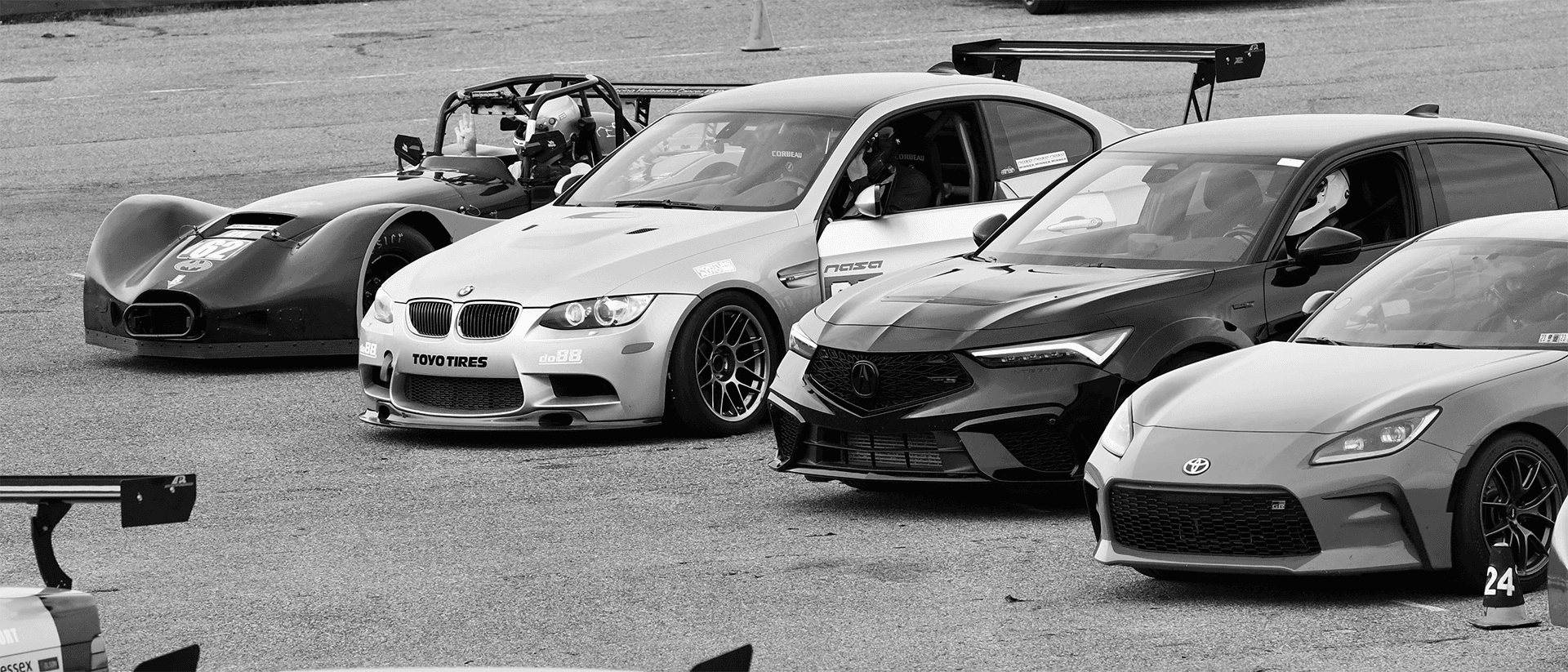
You're about to do something that has real consequences if it goes wrong. Set yourself up for success.
Prep your car. Check that your lug nuts are torqued to spec. Check tire pressures. Check that your brakes have enough life left to get you home. Inspect your tires for wear and damage. Check your oil. Replace anything that's marginal. Don't try to make it through the weekend on parts that are already on the way out.
Install your tow hook on the rear of the car. While you're at it, verify your spare tire and the tools to change it are actually in the trunk and actually work.
Don't put off until later what you can do now. The week of the event is the worst possible time to discover you need new brake pads.
Drink water. Study the track map. Get a full night of sleep. Check the weather.
What to Wear
Closed-toe shoes are required, no exceptions. Some tracks enforce a dress code that bans shorts.
I recommend long pants and a comfortable shirt, both made of natural fibers. Beyond that, dress for the weather you're actually going to have, not the weather you wish you had.
Bring What You Need
These are the must-haves for a successful track day:
- Water
- Lunch and snacks
- Helmet
- Jacket
- Hat
- Sunglasses
- Pen or pencil
- Track map
- Paperwork
- Phone charger
Nice to Have
These make the day a little nicer. You usually learn the hard way, like when your floor mats get rained on because you left them outside the car.
- Chair
- Moving blanket
- Tarp
- Umbrella
- Book
- Wheel chock
Tools
You don't actually need many tools, probably just what came with your car. If you've got more and want to bring some, bring only what you'll realistically use.
- Torque wrench
- Jack
- Tire pressure gauge
- Flashlight
Spare Parts and Fluids
Consider the age and condition of your car. It might be pushed harder this weekend than it has ever been pushed in its life. Bring fluids and basic spares so a small problem doesn't end your weekend.
- Extra engine oil
- Engine coolant
- Brake pad change kit
- Oil change kit
Performance Mods
I don't recommend making any performance modifications before your first track day. Do not add power. Do not add anything that's going to make your car harder to drive at the limit.
That said, if you absolutely insist on putting money into the car beforehand, here's the order I'd do it in:
- Fresh oil change
- Higher-performance brake pads
- Stainless steel brake lines
- High-temperature brake fluid
That's it. Good maintenance and a few small brake upgrades will make your car more reliable on track. Every mod you make at this stage should be focused on reliability and safety first, performance never. If you eventually decide to move into Time Trial or a race group, talk to people who are already doing it before you start building a "track car." You'll save yourself a lot of money and a lot of wrong turns.
Simplify, Add Lightness
Colin Chapman said it about race cars. It applies to track day kits too.
Over time you'll figure out what you actually need and what you don't. Bring less. Your first event you'll overpack. By your tenth, you'll have it dialed. That's the whole arc of this hobby in miniature: pay attention, learn what matters, leave the rest at home.
Previous Post
Initial Commit